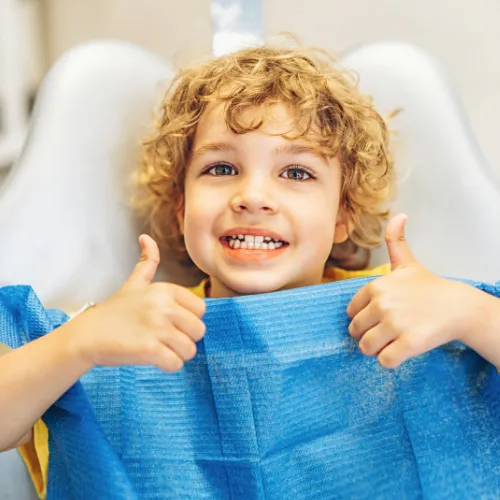
Orthodontic Options That Support Kids at Every Stage
Learn about orthodontic options for kids, the right age for braces, and how early care supports healthy smiles.
Read More

Cosmetic Dentistry, Teeth Straightening
When children smile, they do it without thinking. Wide, unfiltered, and full of confidence. As parents, we want to protect that confidence while also making sure their teeth and jaws are developing in a healthy way. Orthodontic care for kids is not only about straight teeth. It is about guiding growth, preventing future problems, and setting the foundation for a lifetime of good oral health.
At Vartanian Dental Group, orthodontic care is approached with intention and balance. Not every child needs braces early, and not every concern requires immediate treatment. The goal is to understand how each child’s teeth, jaw, and bite are developing and to step in at the right time with the right option.
This article walks through orthodontic options for kids in a clear, practical way. It explains why early evaluations matter, how treatment can differ from one child to another, and what parents should realistically expect as their child grows.
Children’s mouths change rapidly. Baby teeth make room for adult teeth. Jaws grow and shift. Habits like thumb sucking or mouth breathing can quietly affect alignment and bite. Orthodontic care during childhood focuses on working with these changes instead of correcting problems after they are fully developed.
Some benefits of early orthodontic monitoring and treatment include:
Early orthodontic care does not always mean braces right away. In many cases, it simply means keeping a close eye on development and intervening only when it truly benefits the child.
Every child’s smile tells a different story. Some children have spacing issues. Others have crowding. Some have bites that do not line up properly, such as overbites, underbites, or crossbites. Orthodontic options are chosen based on these individual factors, not trends or assumptions.
Common orthodontic options for kids include:
The right option depends on timing, growth patterns, and the specific concern being addressed.
This is one of the most common questions parents ask, and the honest answer is that the best braces are the ones that fit the child’s needs, lifestyle, and stage of development.
Traditional metal braces remain one of the most effective options for kids. Today’s versions are smaller, smoother, and more comfortable than what many parents remember. They are durable and work well for correcting a wide range of alignment and bite issues.
Clear or ceramic braces are another option for some children. These braces blend in more with natural teeth and are often chosen for older kids who are more self-conscious about appearance. They require good oral hygiene and careful handling, which is why they are not always recommended for younger children.
Early orthodontic appliances, sometimes called phase one appliances, are used when jaw growth needs guidance. These are not braces in the traditional sense. They may help widen the upper jaw, correct a crossbite, or create space for incoming teeth.
The best braces for kids are chosen after a full evaluation that considers:
At Vartanian Dental Group, recommendations are made carefully, with the child’s comfort and future health in mind.
Many parents assume orthodontic care starts when all adult teeth are in. In reality, early evaluations play a key role in preventing more complex problems later.
The American Association of Orthodontists recommends that children have their first orthodontic evaluation around age seven. This does not mean treatment will begin at that age. It simply allows the dentist to spot issues early.
An early evaluation can identify:
In many cases, the recommendation is observation only. Regular check-ins allow orthodontic care to begin at the most effective time, rather than too early or too late.
There is no single age that is right for every child. Orthodontic timing depends more on development than on the calendar.
For many children, braces are most effective between ages nine and fourteen, when they are still growing and most adult teeth are coming in. During this stage, teeth move more easily, and jaw growth can still be guided.
Some children benefit from earlier treatment, especially if they have jaw alignment issues, crossbites, or severe crowding. Others may not need braces until their early teenage years.
Factors that help determine timing include:
The best age for braces is the age when treatment will be most effective and least disruptive to the child’s development. This is why personalized evaluations matter more than general timelines.
Orthodontic treatment is about more than teeth. It can influence how children feel about themselves, how they speak, and how they interact with others.
Many kids feel proud of taking care of their smiles. Choosing colored bands, seeing progress, and understanding why treatment matters can make the experience positive. Clear communication and realistic expectations help children feel involved rather than overwhelmed.
Orthodontic care can also improve:
When orthodontic care is introduced thoughtfully, it becomes part of normal life rather than something that defines it.
Orthodontic treatment for kids is sometimes divided into stages, depending on their needs. Not every child goes through multiple stages, but understanding them helps parents know what to expect.
Stage one, often called early or interceptive treatment, focuses on guiding jaw growth and creating space for adult teeth. This stage usually happens when a child still has a mix of baby and adult teeth.
Stage two typically occurs once most or all adult teeth are in. This stage focuses on aligning teeth and fine-tuning the bite using braces or other orthodontic tools.
Some children only need stage two treatment. Others benefit from both stages, especially if early issues are addressed proactively.
The number of stages depends on:
The goal is always efficient, effective care that supports long-term results, not unnecessary treatment.
Braces and appliances make oral hygiene more important than ever. Food particles and plaque can collect easily around brackets and wires, increasing the risk of cavities and gum irritation.
Good habits during orthodontic treatment include:
Parents play a key role in helping younger children stay consistent, especially during the early stages of treatment.
Orthodontic care is a journey, not a single appointment. Knowing what to expect can make the experience smoother for both parents and kids.
Typical orthodontic care includes:
Appointments are usually short, and most kids adapt quickly to their new routines. Clear communication and steady progress help keep treatment on track.
Orthodontic treatment does not end when braces come off. Retainers play a crucial role in keeping teeth in their new positions while the mouth adjusts.
Long-term success depends on:
Orthodontic care is an investment in a child’s future smile, comfort, and confidence.
At Vartanian Dental Group, orthodontic care for kids is rooted in balance. Treatment is recommended when it adds real value to a child’s health and development, not simply because an option exists.
Every child deserves care that respects their individuality and supports healthy growth at the right time.
If you have questions about your child’s smile or want to understand which orthodontic options may be appropriate, schedule an appointment with Vartanian Dental Group. A personalized evaluation can provide clarity, reassurance, and a clear path forward toward a healthy, confident smile.

Mission Viejo, CA dental office




Mon-Thurs 7:30-5 pm
Fri 7:30-3 pm
Sat & Sun Closed
26302 La Paz Rd. #203
Mission Viejo, CA 92691
Mission Viejo, CA caring dentist
Check out what our happy clients are saying.







Industry Accreditations Mission Viejo, CA





Best smiles Mission Viejo, CA
#VartanianDentalGroup
Check us out and follow our accounts on the following social media platforms for more healthy smiles....